Why a hand position does anything at all
Mudras look like the least powerful practice available — you just hold your fingers a certain way. What they do is give scattered attention a physical anchor. The shape is a cue, the same way a mat is a cue for exercise. Hold one for ten minutes with slow breathing and the effect is closer to a short meditation than to nothing.
Seven mudras worth knowing
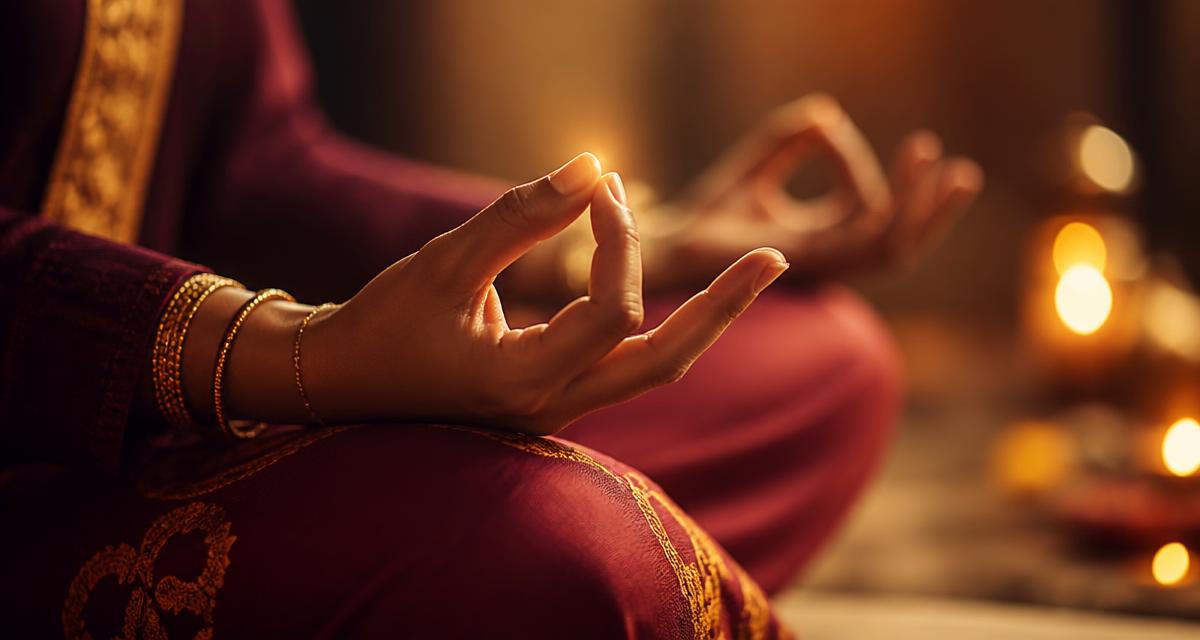
1. Gyan Mudra — focus and calm
Index fingertip to thumb tip, other fingers extended, palms up on the knees. The default for meditation.
2. Prana Mudra — energy and vitality
Ring and little fingertips to the thumb tip. Traditionally used when you feel drained and flat.
3. Apana Mudra — release and digestion
Middle and ring fingertips to the thumb tip. Used after meals and when you feel heavy or stuck.
4. Shunya Mudra — quiet and inner ear
Middle finger folded into the base of the thumb, thumb pressing lightly on top. Good for a loud, overstimulated mind.
5. Adi Mudra — settling the breath
Thumb into the palm, fingers closed over it, fists resting on the thighs. Excellent before sleep.
6. Anjali Mudra — grounding and gratitude
Palms together at the heart. Use it to open and close every practice; it marks a clean beginning and end.
7. Dhyana Mudra — deep meditation
Hands in the lap, right over left, thumb tips lightly touching. For longer sittings.
A 5-minute desk routine
Between meetings, chair, feet flat
- 30 sec — Anjali mudra at the heart, three slow breaths.
- 2 min — Gyan mudra, inhale 4 and exhale 6, eyes closed or soft.
- 2 min — Prana mudra if you feel drained, Adi mudra if you feel wired.
- 30 sec — hands on the thighs, breathe normally, then open the eyes slowly.
Getting them right
- Fingertips touch — they do not press. Whitened nails mean too much force.
- Both hands, unless a practice says otherwise.
- Pair with slow breathing; the gesture alone is only half of it.
- Same mudra daily for two weeks beats a different one every day.
These are traditional wellness practices, not medical treatment for any condition.
Frequently asked questions
Book a 1:1 session with Kiran Goyal
Sessions run online across India — Delhi, Mumbai, Bengaluru, Jaipur, Pune, Hyderabad and everywhere in between. Walk away with a clear, practical plan for the week ahead.
Book Your Session →